amESE Club · Deep Learning · Computer Vision
AUV for Marine Debris Detection and Biodiversity Analysis
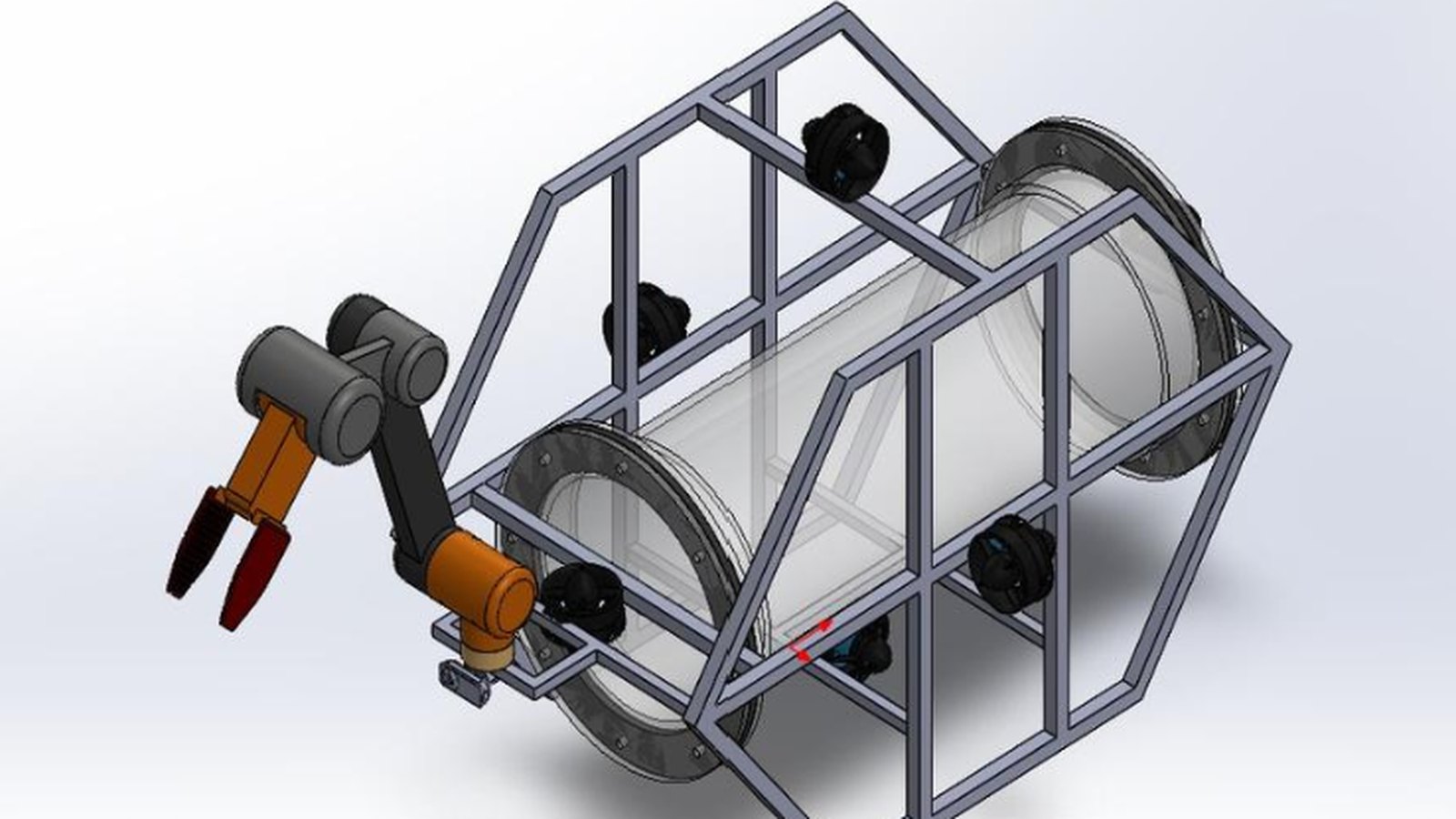
A conceptual AUV framework pairing a compact debris-detection CNN with a YOLOv8 species detector, so one vehicle can both find what should not be in the water and catalogue what should.
Period
Jun 2024
Stack
Deep Learning · Computer Vision · CNN · YOLOv8 · Perception
Highlights
- 01Debris detection CNN: 3.3M parameters, 94.34% validation accuracy, 45 ms per image
- 02Species detection with YOLOv8: 11.1M parameters, precision 0.977 and recall 0.964, mAP50 0.988, mAP50-95 0.865
- 03Trained on curated underwater datasets and evaluated for robustness under varying lighting and turbidity
- 04Vision-based perception integrated into an autonomous navigation pipeline for debris localization and retrieval
Demo video
The species detector running on reef footage
Write-up
The framework answers two different questions with two different models, because they have genuinely different requirements. Debris detection is the question the vehicle has to answer while the object is still in front of it, so that model was designed small — 3.3M parameters, 45 ms per image, 94.34% validation accuracy. It is the perception stage that can sit inside a control loop on embedded hardware.
Species identification is the opposite. Getting it right matters more than getting it fast, since the point is knowing what not to disturb while retrieving debris. That model is YOLOv8 at 11.1M parameters, reaching 0.977 precision and 0.964 recall, mAP50 of 0.988 and mAP50-95 of 0.865 — at 322 ms per image, roughly seven times slower than the debris model and perfectly acceptable for the job it does.
Underwater imagery is its own problem regardless of which model is looking at it. Turbidity, shifting light and low visibility all degrade networks trained on clean data, so the datasets were curated for those conditions and the models evaluated specifically for robustness across them rather than on a single clean benchmark.
Both detectors feed a path planning pipeline that turns detections into approach trajectories, closing the loop from image to debris localization and retrieval.